Mountains and Waterfalls in Norway: Nature at Its Most Dramatic
Norway is a country shaped by ice, water, and time. Towering mountains rise straight from deep fjords, and waterfalls cascade down steep cliffs in spectacular displays. Few places in the world combine such raw power and serene beauty so seamlessly.
 Dekode Interaktiv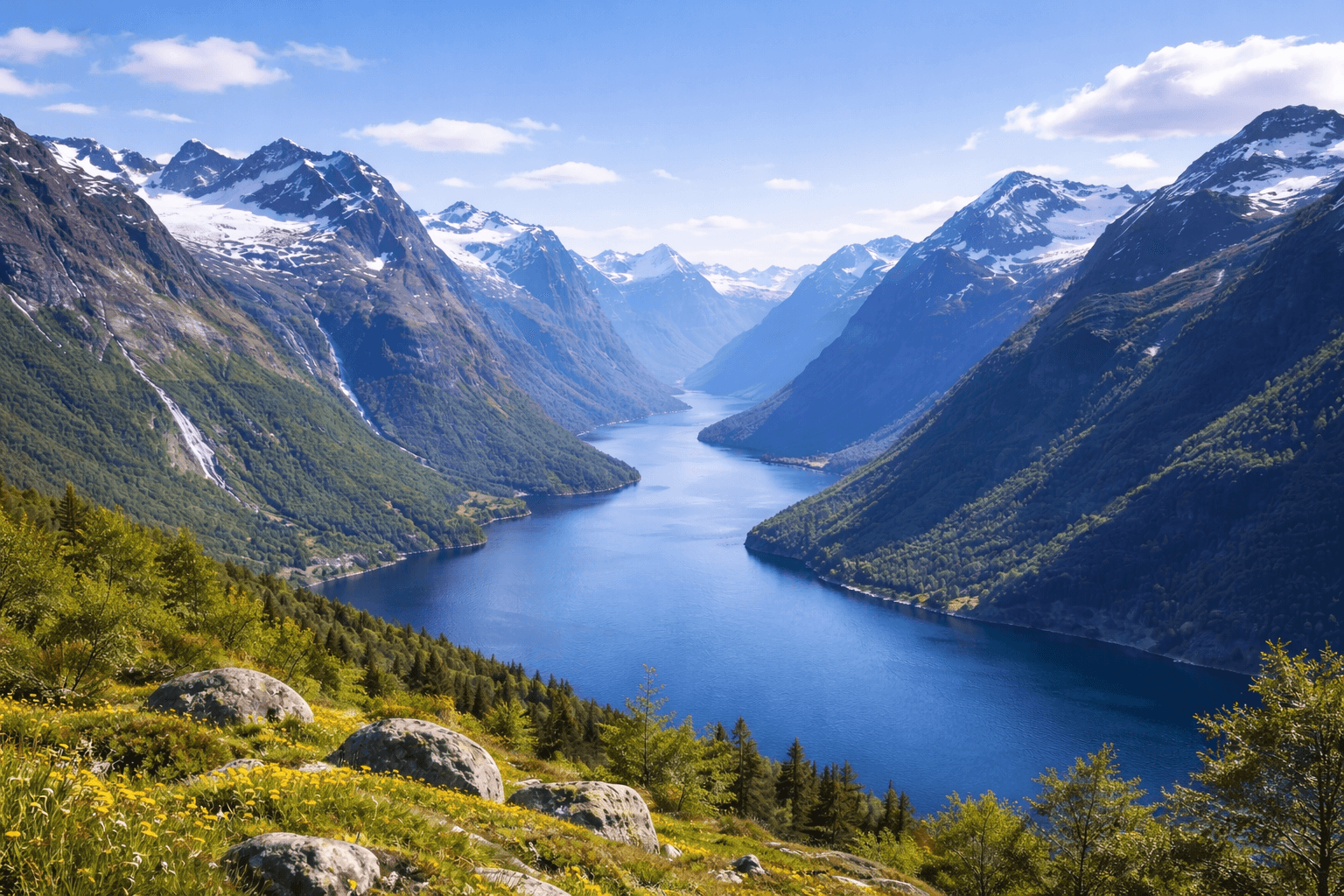
Summary created by AI
- Norway’s dramatic landscape, including fjords and prominent mountain regions like Jotunheimen and Lofoten, was sculpted by the last Ice Age.
- The country is home to numerous powerful waterfalls, such as Vøringsfossen and the Seven Sisters, fueled by steep terrain and heavy rainfall/snowmelt.
- Exploring Norway’s natural beauty is best done on foot, with popular hikes including Trolltunga, Preikestolen, and Romsdalseggen Ridge offering breathtaking views.
- The landscape transforms remarkably through the seasons, from roaring spring waterfalls and summer hiking to autumn foliage and magical, snow-covered winter scenes.
A Landscape Carved by Ice
Norway’s dramatic scenery is largely the result of the last Ice Age. Massive glaciers carved out deep valleys that later filled with seawater, forming the famous fjords. Around these fjords, sharp mountain peaks and vast plateaus dominate the landscape.
One of the most iconic mountain regions is Jotunheimen, home to Norway’s highest peaks, including Galdhøpiggen (2,469 meters) and Glittertind. This area offers challenging hikes, glacier walks, and panoramic views that stretch for miles.
Further west, the Lofoten Islands rise steeply from the sea, with jagged peaks contrasting against white sandy beaches. The combination of mountains and ocean creates a uniquely dramatic setting.
The Power of Waterfalls
With steep terrain, heavy rainfall, and melting snow, Norway has some of the tallest and most powerful waterfalls in Europe.
Among the most famous is Vøringsfossen, plunging 182 meters into the Måbødalen valley. Viewing platforms allow visitors to safely experience the sheer drop and roaring water.
In the fjord region, the Seven Sisters (De Syv Søstre) waterfall flows gracefully into Geirangerfjord, directly across from another waterfall called The Suitor (Friaren). These waterfalls are not only natural wonders but also part of local folklore.
Another spectacular site is Langfossen, where water cascades down a steep mountainside before flowing directly into the Åkrafjord. Unlike many waterfalls, visitors can get remarkably close to the rushing water.
Hiking Between Peaks and Falls
Norway’s mountains and waterfalls are best experienced on foot. Trails range from family-friendly paths to demanding alpine routes.
Popular hikes include:
- Trolltunga, a dramatic rock formation suspended above Ringedalsvatnet lake.
- Preikestolen (Pulpit Rock), offering breathtaking views over Lysefjord.
- Romsdalseggen Ridge, known for its sharp ridgeline and sweeping mountain scenery.
Many hikes pass waterfalls along the way, especially during spring and early summer when snowmelt makes them most powerful.
A Changing Landscape Through the Seasons
Each season transforms Norway’s mountains and waterfalls:
- Spring: Snowmelt feeds roaring waterfalls.
- Summer: Long daylight hours provide ideal hiking conditions.
- Autumn: Golden foliage contrasts beautifully with dark rock and white water.
- Winter: Frozen waterfalls and snow-covered peaks create a quiet, magical atmosphere.
A Place of Perspective
Norway’s mountains and waterfalls are more than tourist attractions—they are reminders of nature’s scale and power. Standing beneath a cascading waterfall or on a windswept mountain ridge offers a rare sense of perspective and calm.
Whether you seek adventure, photography, or simply quiet reflection, Norway’s landscapes provide unforgettable experiences shaped by water, stone, and time.